Retail’s move toward 2D barcodes is also a data-management project. A richer symbol on a package is useful only when the systems behind it can resolve the right product and return information that is current and appropriate for the reader.
GS1 describes Ambition 2027 as an industry goal for retail point-of-sale systems to read and process a defined set of GS1-standard 2D barcodes by the end of 2027, alongside existing linear barcodes. It is a transition goal, not a claim that every retailer has completed deployment or that existing barcodes disappear on one date. See GS1’s explanation.
What changes for a retail data team
Consider a fictional packaged product with a product identifier, a batch identifier, a supplier record and a care guide. These pieces of information answer different questions. A checkout needs an exact product match. A service representative may need a particular batch. A shopper may ask a natural-language question about storage.
Treating all of those as one undifferentiated search problem makes the result harder to verify. Exact identifiers should resolve deterministically. Text retrieval can help people discover guidance, but should not replace a confirmed product or batch match.
Where OriginChainDB can fit
The following is an application design proposal, not an announcement of a GS1 integration or certification. SQL records can hold product and batch attributes. Declared graph relations can represent supported connections between records. FTS can help staff find a phrase in product guidance, while vector retrieval can be evaluated for differently worded questions.
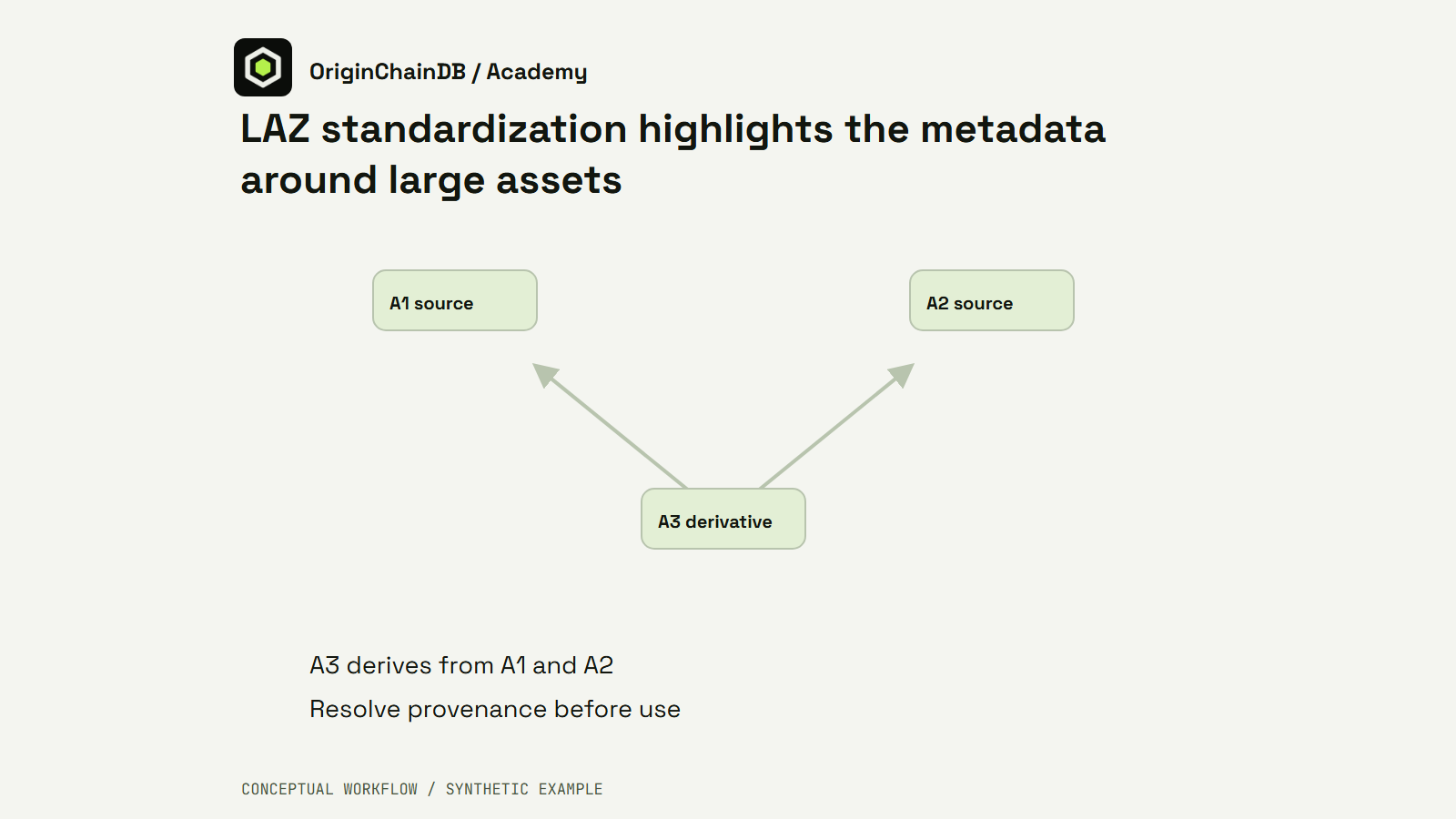
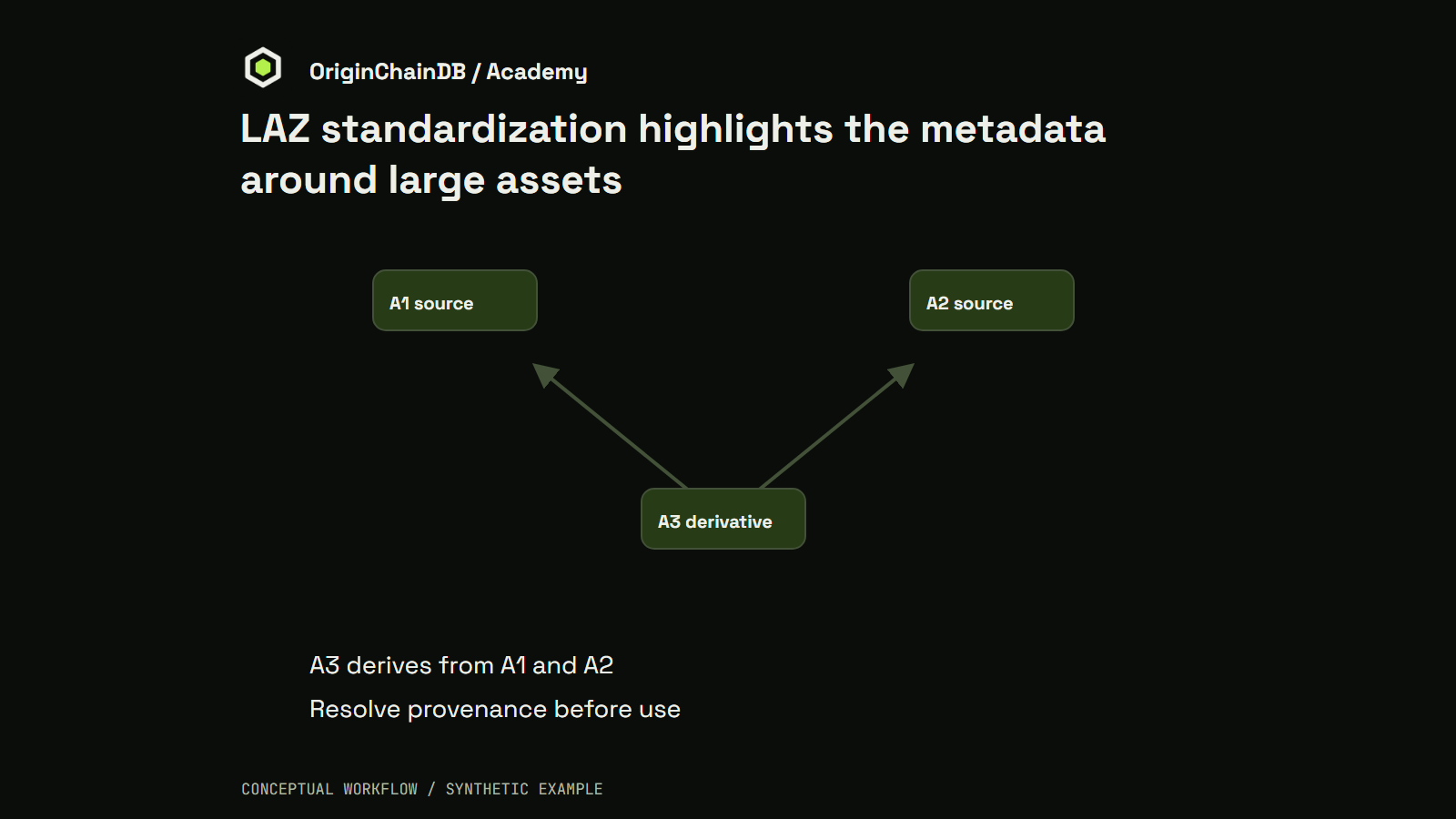
Use a shared, stable source identity across these retrieval paths. For example, a search hit for storage guidance should resolve to a specific approved document and revision. If the document changes, update its source and explicitly refresh the relevant derived indexes. A stale answer can be misleading even when the scan itself succeeded.
The barcode decoder, GS1 identifier handling, validation and any Digital Link resolver remain components that must be implemented or integrated separately. Choosing a database does not establish standards conformance.
A useful first pilot
Select ten fictional or approved products and one concrete task: show the current storage guide after a product is identified. Test a known product, an unknown identifier, a missing guide and a superseded guide. Keep a record of the exact source selected for each response.
Next, add a staff search over the same approved guidance. Ask whether a keyword query and a differently worded question find useful material. Keep the product lookup independent of relevance ranking so a similar name cannot silently become a different product.
Measure correctness and update visibility before optimizing response time. Agree on who owns each data field and how conflicting supplier updates are resolved. Those decisions are as important as the query mechanism.
What to watch next
Track guidance from GS1 and your actual scanner, POS and solution providers. Keep their capability statements separate from your application’s test results. OriginChainDB can be evaluated as the connected data layer for this pilot, with SQL schemas, graph relations and FTS serving different retrieval needs.
This is an industry perspective researched on 5 October 2026. The pilot above is illustrative; it does not describe a customer deployment or a measured performance improvement.